Artificial intelligence has largely solved the compute problem, but robotics and Physical AI face a different bottleneck: data.
Unlike language models, which were trained on enormous amounts of text already available online, robotics has no equivalent “internet of physical interactions.” Training general-purpose robots requires vast amounts of real-world and simulated behavior data, and today that data exists only at a fraction of the scale needed.
This gap is one of the main constraints holding back the next generation of robotics. Hardware, compute, and algorithms are advancing quickly, but collecting diverse, high-quality training data remains expensive and difficult to scale.
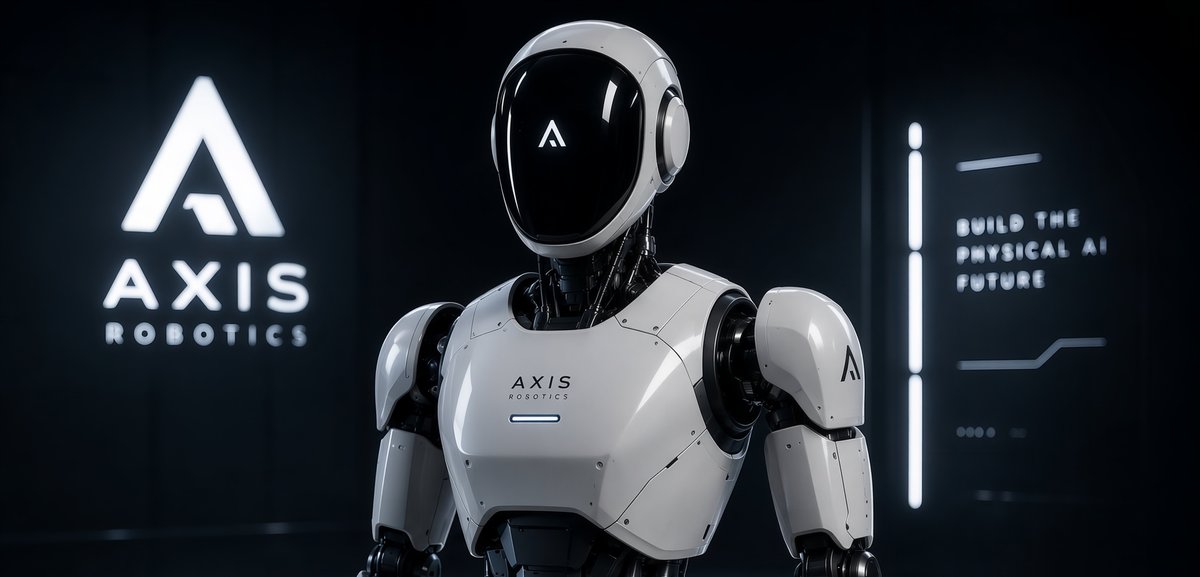
The article looks at Axis Robotics, which is building a closed-loop data engine designed to make robotics data collection more scalable. Its platform combines browser-based simulation, mobile ego-centric data capture, and a unified data-to-model pipeline. As of late August 2026, Axis had surpassed 150,000 contributors and collected more than 3.7 million trajectories across 4,000+ tasks.
Axis also uses blockchain infrastructure to track provenance. Accepted trajectories can be recorded on-chain with a unique Data ID linked to the contributor, timestamp, task, and quality score, creating a transparent record of where training data came from.
Cicada CEO and co-founder Maxim Moris adds a market perspective to the discussion. His view is that demand for robotics data is real and likely durable, but that does not automatically mean every project in the category needs its own token. For Cicada, the key question is whether a token has a real economic role or is simply being used as a funding and marketing mechanism.
Physical AI is likely to become a major technology category, but the investable and tradable opportunities may ultimately break down into specific subsegments such as data collection, simulation, VLA models, hardware, and fleet operations rather than a single unified narrative.
The broader takeaway is simple: the next major constraint in AI may not be compute, but the ability to produce enough high-quality data for machines to understand and interact with the physical world.